◈This opening chapter grounds the sommelier in the fundamentals of how wine comes to be — defining wine and its principal styles before tracing the full arc of production, from viticulture in the vineyard to vinification in the cellar.
From the book
Real Pages From This Chapter
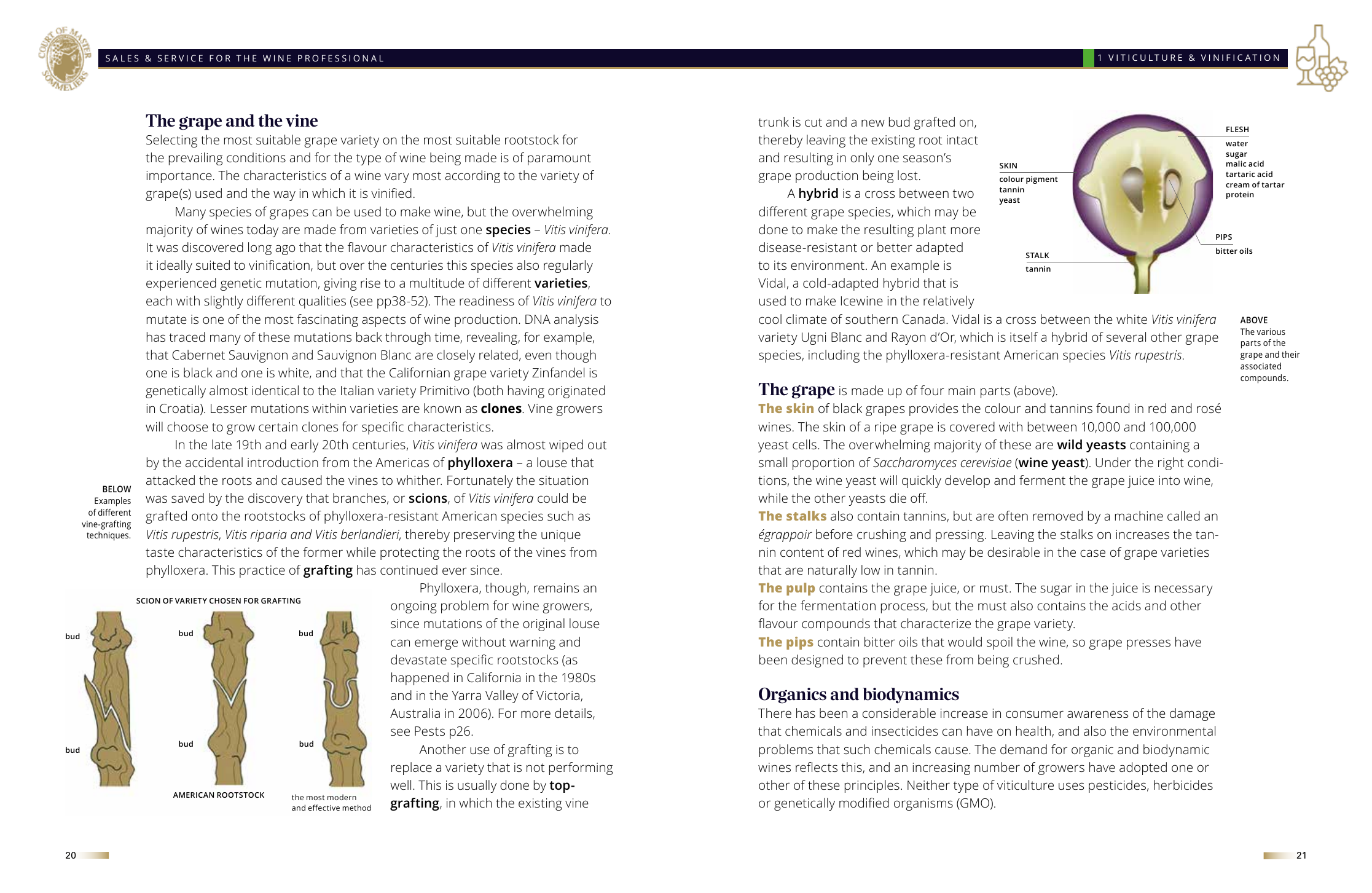
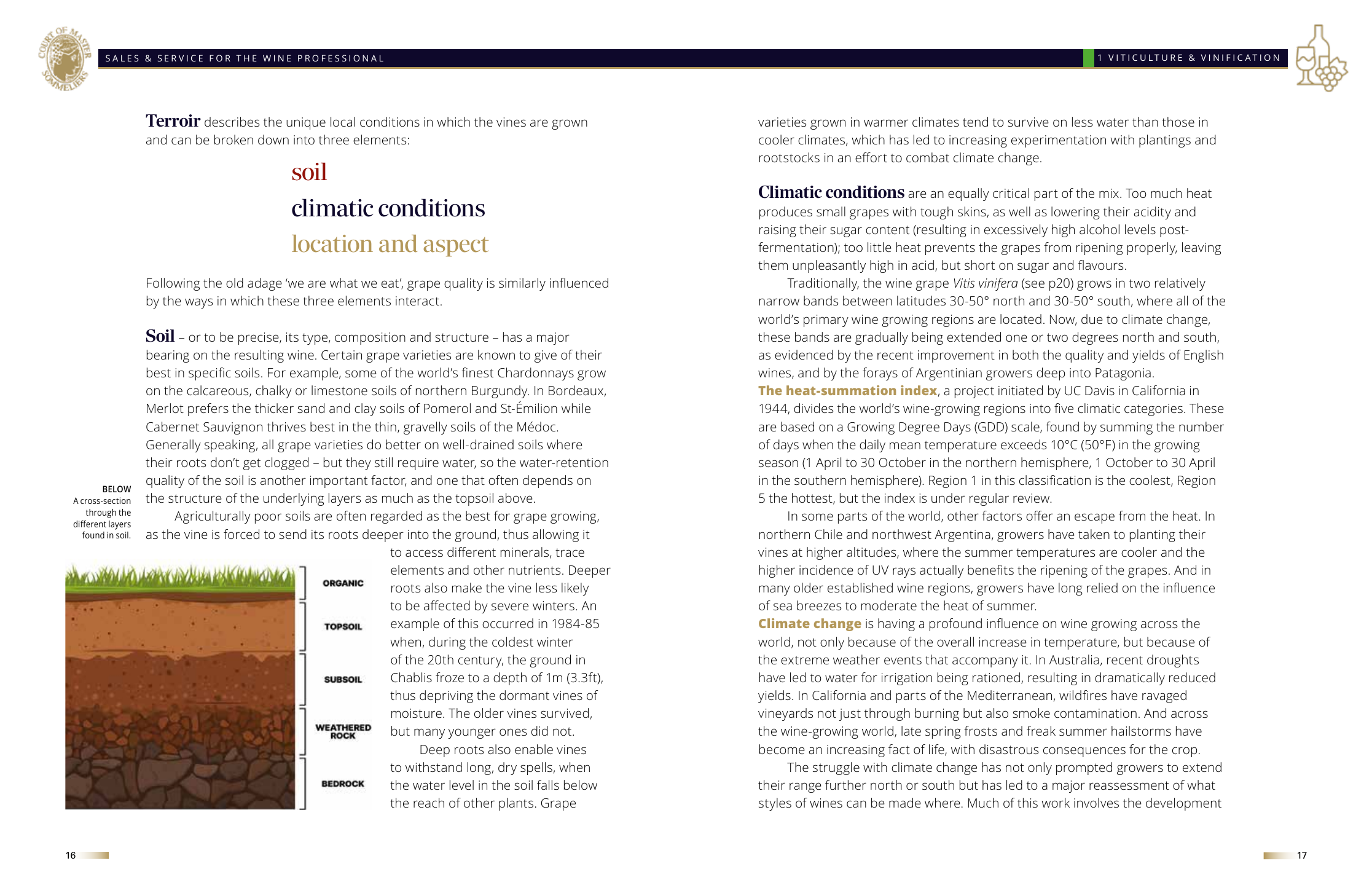
The grape & the vine — anatomyTerroir — a cross-section of the soil
◲ Tap any page to read it full-size
Why this chapter matters
What You’ll Learn
Read a wine’s terroir from soil, climate and aspect — and explain why a Médoc Cabernet or a Mosel Riesling tastes as it does.
Trace any quality wine back to a single species, Vitis vinifera, accounting for variety, clone, hybrid and grafted rootstock.
Explain the phylloxera crisis and why grafting onto American rootstock underpins almost every vineyard today.
Walk a guest through vinification — fermentation, malolactic and oak maturation — and predict how each choice shapes the wine.
◈ For your CMS exam
Must-Know Facts
Vitis vinifera grows in two narrow bands between latitudes 30–50° north and south, where the world’s primary wine regions sit.
Phylloxera, a root-attacking louse from the Americas, was beaten by grafting vinifera scions onto resistant American rootstocks.
Malolactic fermentation converts sharper malic acid into softer lactic acid, releasing CO2; it can be blocked, allowed or induced.
A ripe grape skin carries 10,000–100,000 yeast cells, mostly wild, with some Saccharomyces cerevisiae (wine yeast).
What This Chapter Covers
01
Definition & classification of wine
02
Terroir: soil, climate & aspect
03
The grape, the vine & Vitis vinifera
04
Organic, biodynamic & natural viticulture
05
Vineyard diseases & pests
06
Vinification: fermentation & maturation
Key Points
01
Wine is grape juice (must) in which yeasts convert sugar into alcohol — across red, white and rosé; still, sparkling and fortified styles.
02
Terroir — the interplay of soil, climate, location and aspect — shapes grape quality; poor, well-drained soils often force deeper roots and finer fruit.
03
Nearly all fine wine comes from Vitis vinifera; since phylloxera, vines are grafted onto resistant American rootstocks.
04
Red wines ferment on their skins (cuvaison) for colour and tannin, while white musts are pressed off the skins first.
05
The winemaker shapes the wine through malolactic fermentation, racking off the lees, fining, and maturation in steel or oak.
“Wine is a beverage produced from grape juice (must) that has undergone fermentation or part-fermentation – a process that uses yeasts to convert the sugars within the grape juice into alcohol.
◈ Sommelier · Chapter 1
◈ Value for the Sommelier
Before a sommelier can speak with authority at the table, they must understand what is in the glass and how it arrived there. This chapter equips the professional to read a wine’s structure back to its origins — and so to recommend, serve and explain wine with genuine understanding rather than received opinion.