◈This chapter moves past wine to the wider drinks list a sommelier must command — opening with the two pillars of distillation before working through spirits, brandies, liqueurs, beer, cider and the mixers that complete service.
From the book
Real Pages From This Chapter
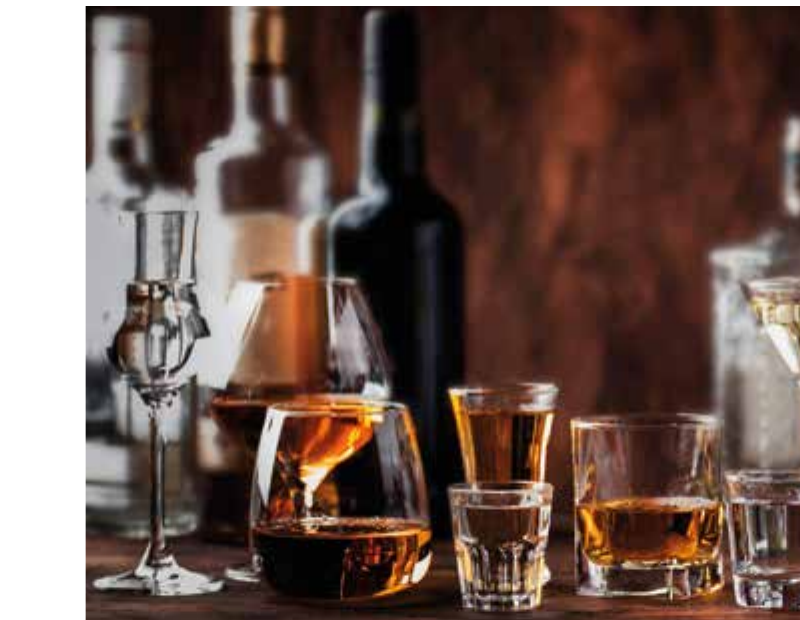
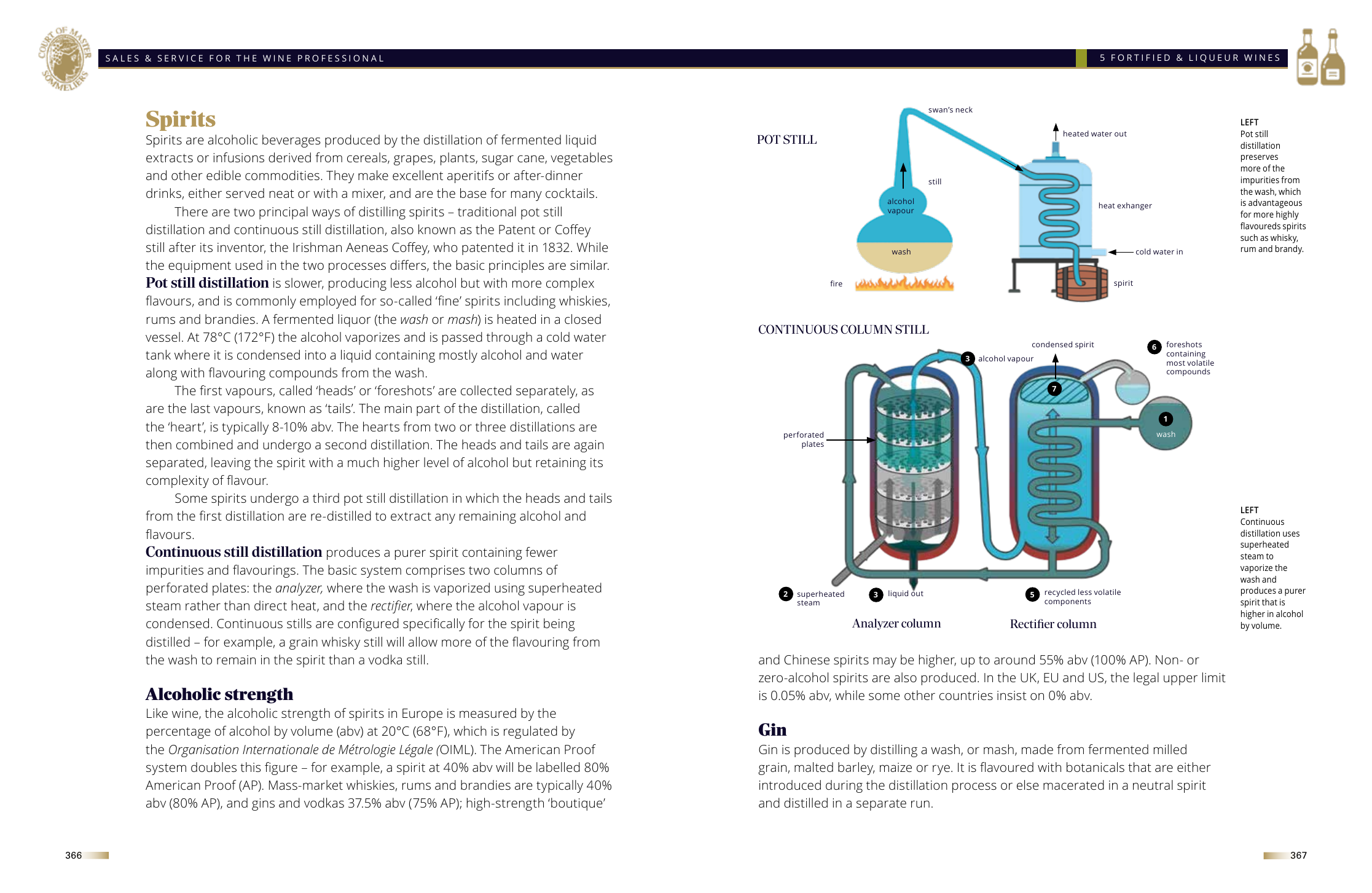
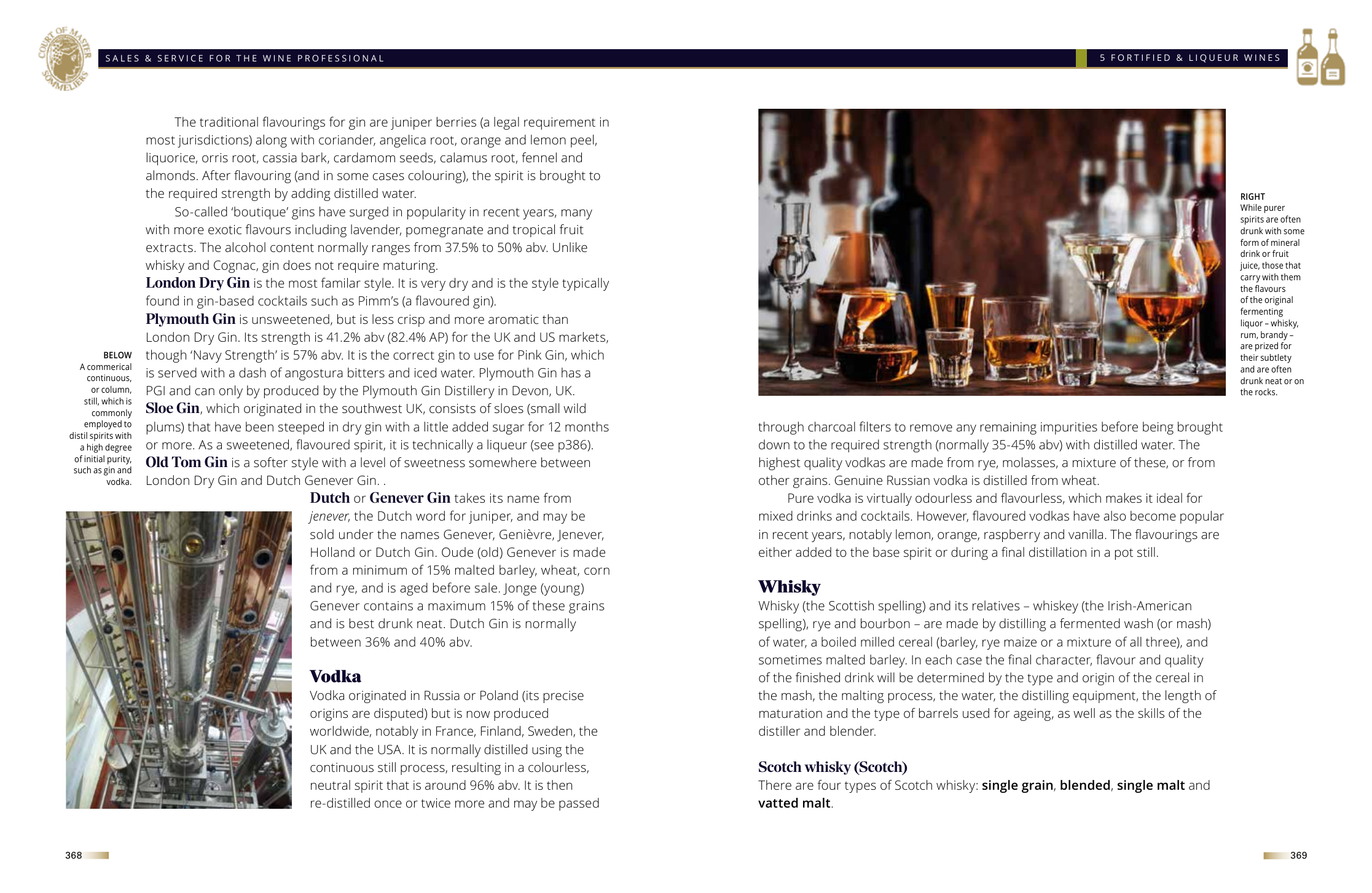
Distillation — pot & continuous stillWhisky — regions and styles
◲ Tap any page to read it full-size
Why this chapter matters
What You’ll Learn
Distinguish pot still from continuous (Coffey) still and explain why whisky, rum and brandy carry more flavour than gin or vodka.
Navigate Scotch whisky’s types and five regions, placing a malt by house style — floral Speyside to peaty Islay.
Decode Cognac and Armagnac age statements (VS, VSOP, Napoleon, XO) and trace each back to grape, still and region.
Present saké with authority — reading the polishing grade and advising on serving temperature.
◈ For your CMS exam
Must-Know Facts
The continuous still was patented by Aeneas Coffey in 1832; its columns are the analyser and the rectifier.
Cognac is ~98% Ugni Blanc, double-distilled in copper Charentais pot stills, matured a minimum two years in oak.
Scotch’s five GI regions: Highland, Speyside, Islay, Campbeltown, Lowland; all Scotch matures in oak at least three years.
Saké quality rises as more rice is polished away: Ginjo to 60%, top Daiginjo milled to 50%.
What This Chapter Covers
01
Distillation — pot vs continuous still
02
Whisky, gin & rum
03
Cognac, Armagnac & brandies
04
Liqueurs & bitters
05
Beer, cider & perry
06
Minerals & mixers
Key Points
01
Two distillation methods underpin every spirit: the pot still (slower, retains flavour) and the continuous, or Coffey, still (purer, higher strength).
02
Cognac and Armagnac are both grape brandies of delimited south-west France, distinguished by their still and strength.
03
Whisky divides by origin and grain — the Scotch regions, Irish whiskey (always with an ‘e’), and North American bourbon and rye.
04
Liqueurs are sweetened, flavoured spirits — spanning citrus, herbal, cream and whisky-based families.
05
Beer, cider, perry and saké each have distinct processes, while natural mineral waters and mixers round out the repertoire.
“Saké is a Japanese alcoholic drink made from fermented rice with an alcohol content of between 15% and 18% abv.
◈ Sommelier · Chapter 5
◈ Value for the Sommelier
A sommelier’s authority does not end at the wine list. Guests order a Cognac after dinner, a gin and tonic before it, a craft beer alongside, or a sparkling water throughout — and each deserves the same precision of knowledge and service. This chapter equips the professional to define, recommend and serve every category correctly.