◈The book’s largest chapter surveys the wine-producing world region by region across six continents — from the founding classics of Europe, through the cradle of viniculture in Georgia and the emerging vineyards of Asia and Africa, to the Americas, Australia and New Zealand.
From the book
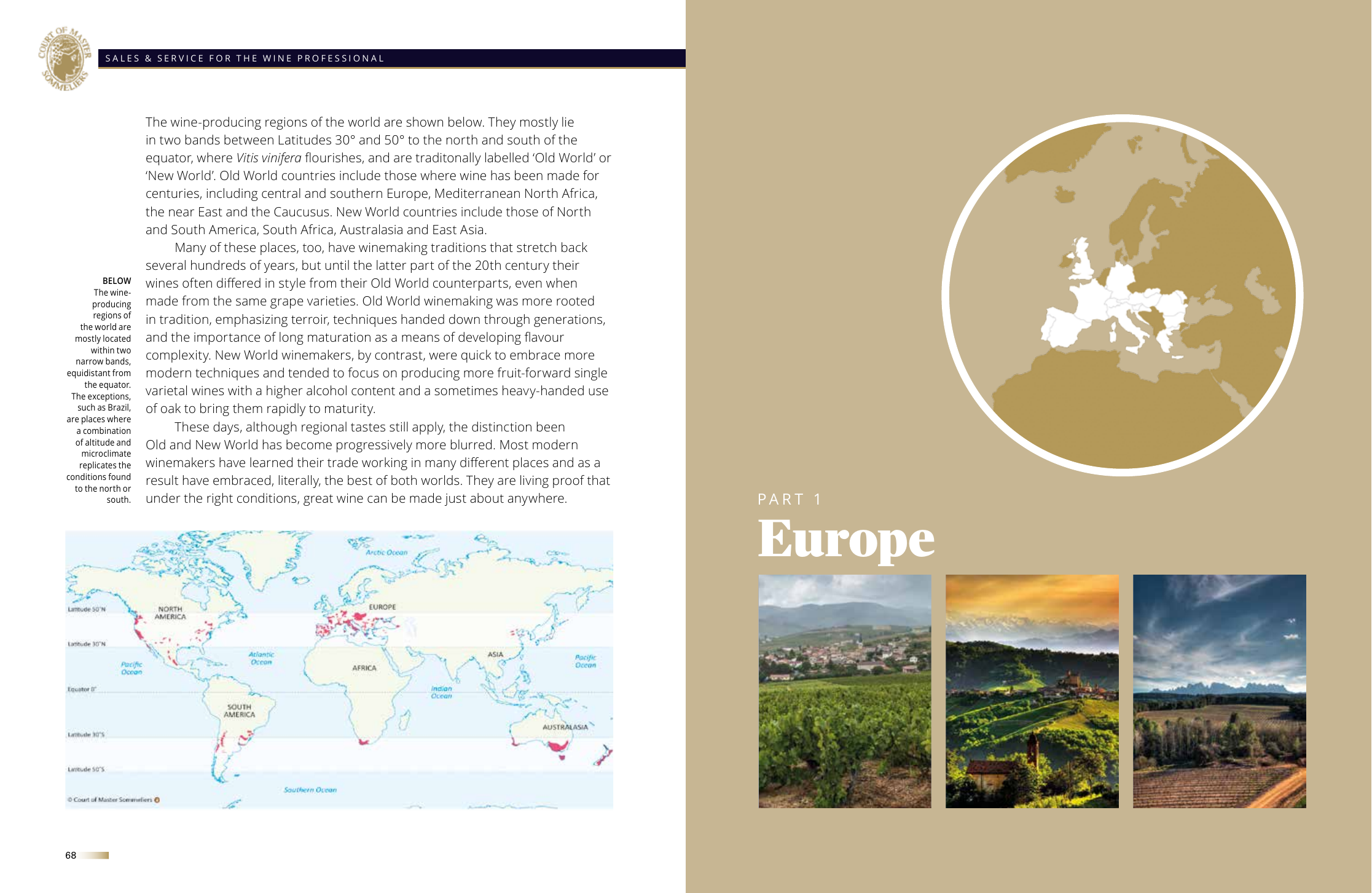
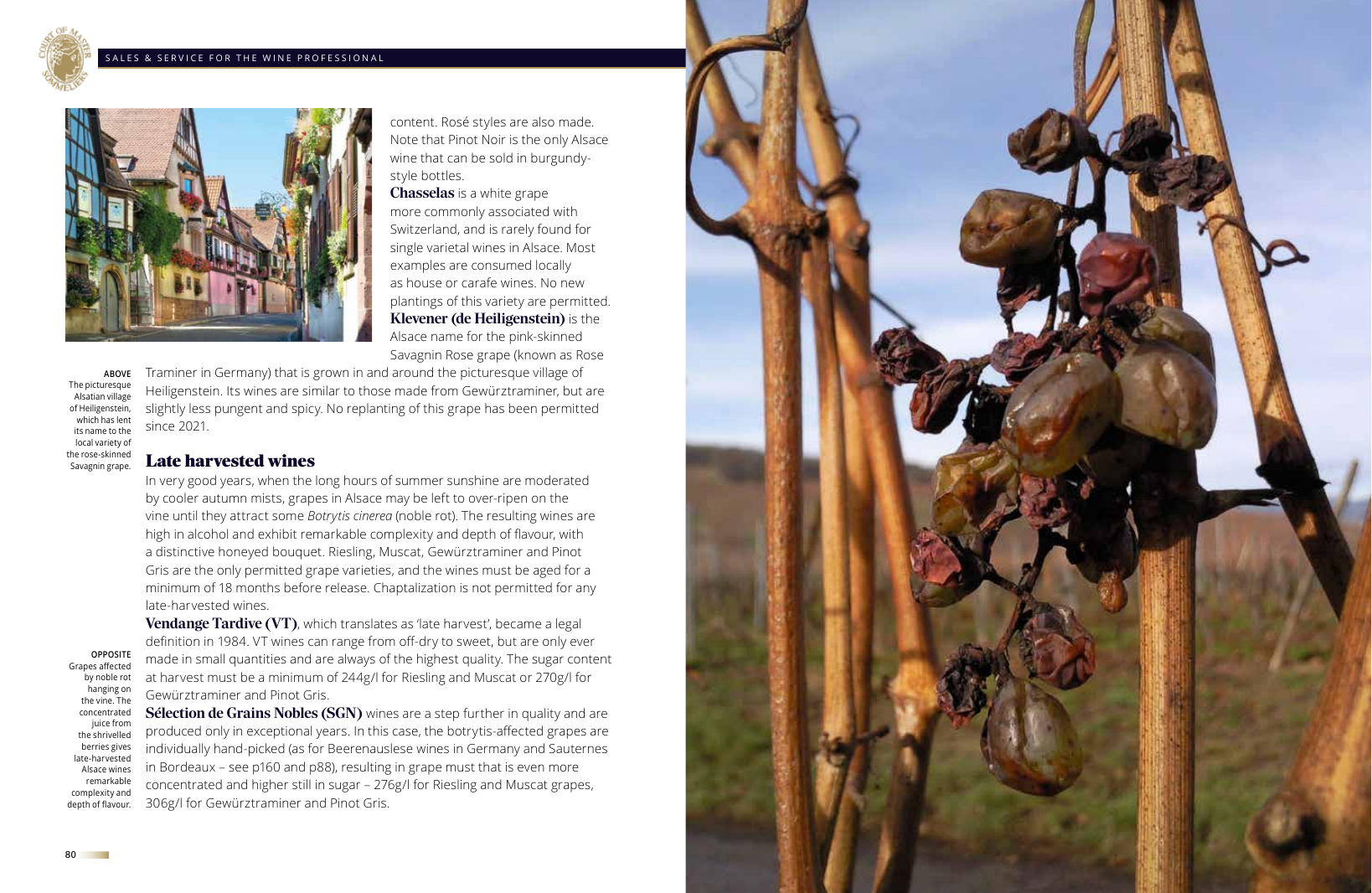
Real Pages From This Chapter
The wine world, mapped — EuropePhotographed region by region
◲ Tap any page to read it full-size
Why this chapter matters
What You’ll Learn
Explain why a Chilean Sauvignon tastes different from a New Zealand one — grounded in climate, soil and tradition.
Read any French label with confidence, placing it in the hierarchy: AOC/AOP, IGP, Vin de France.
Distinguish ‘Old World’ from ‘New World’ by style and provenance — while knowing the divide is now blurred.
Navigate the Bordeaux sub-regions and the 1855 classification, from a communal Médoc to a First Growth.
◈ For your CMS exam
Must-Know Facts
France’s four-tier classification (INAO, 1936): AOC, VDQS, Vin de Pays, Vin de Table; AOC/AOP is ~55–60% of production.
The 1855 Bordeaux classification ranked top reds in five crus; First Growths: Lafite, Latour, Margaux, Mouton Rothschild and Haut-Brion.
Château d’Yquem was the only Sauternes graded Premier Grand Cru Exceptionnel in 1855; Sauternes is ~80% Sémillon, botrytis-affected.
The Charmat (cuve close) method is barred for French AC sparkling wine but allowed for German Sekt and Italian DOC/DOCG.
What This Chapter Covers
01
Europe — the historic heart
02
France — the most detailed treatment
03
Italy, Spain & Portugal
04
Eurasia & Africa — Georgia, Turkey, China
05
The Americas
06
Australia & New Zealand
Key Points
01
Regions are introduced through their classification frameworks first — French AOC/IGP, Italian DOCG, Spanish and Portuguese DO, German Prädikat, New World AVA/GI — so labels become legible.
02
France is treated in the greatest depth, region by region, including the historic 1855 Médoc classification.
03
The Old World extends well beyond the famous names — Switzerland, England & Wales, Greece, Hungary and central & eastern Europe.
04
Eurasia and Africa recognise Georgia as the cradle of winemaking, alongside Turkey, China and South Africa.
05
The New World is surveyed in full — the USA, Canada, Mexico, Chile, Argentina, Uruguay, Australia and New Zealand.
“They are living proof that under the right conditions, great wine can be made just about anywhere.
◈ Sommelier · Chapter 3
◈ Value for the Sommelier
For a sommelier this chapter is the working map of the wine world. It connects each bottle to its place, climate and rules of origin — giving the professional the vocabulary to read any label, anticipate a wine’s style before tasting, and guide a guest with authority across both the founding regions of Europe and the producers now reshaping the global table.