◈This chapter is the hands-on choreography of beverage service — from the mise en place before guests arrive, through the precise rituals of opening, presenting, pouring and decanting wine, and on to the service of spirits, beers and classic cocktails.
From the book
Real Pages From This Chapter
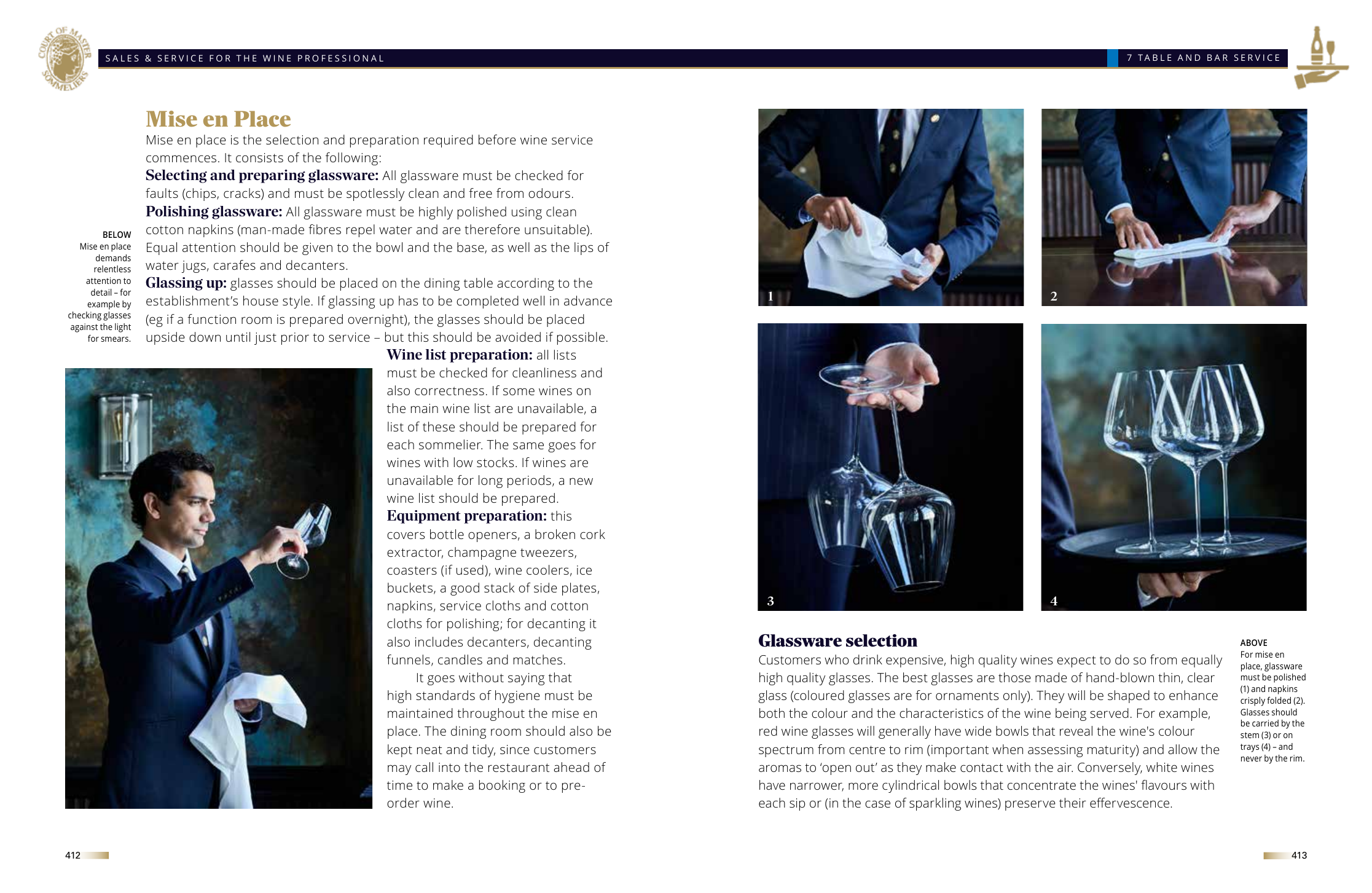
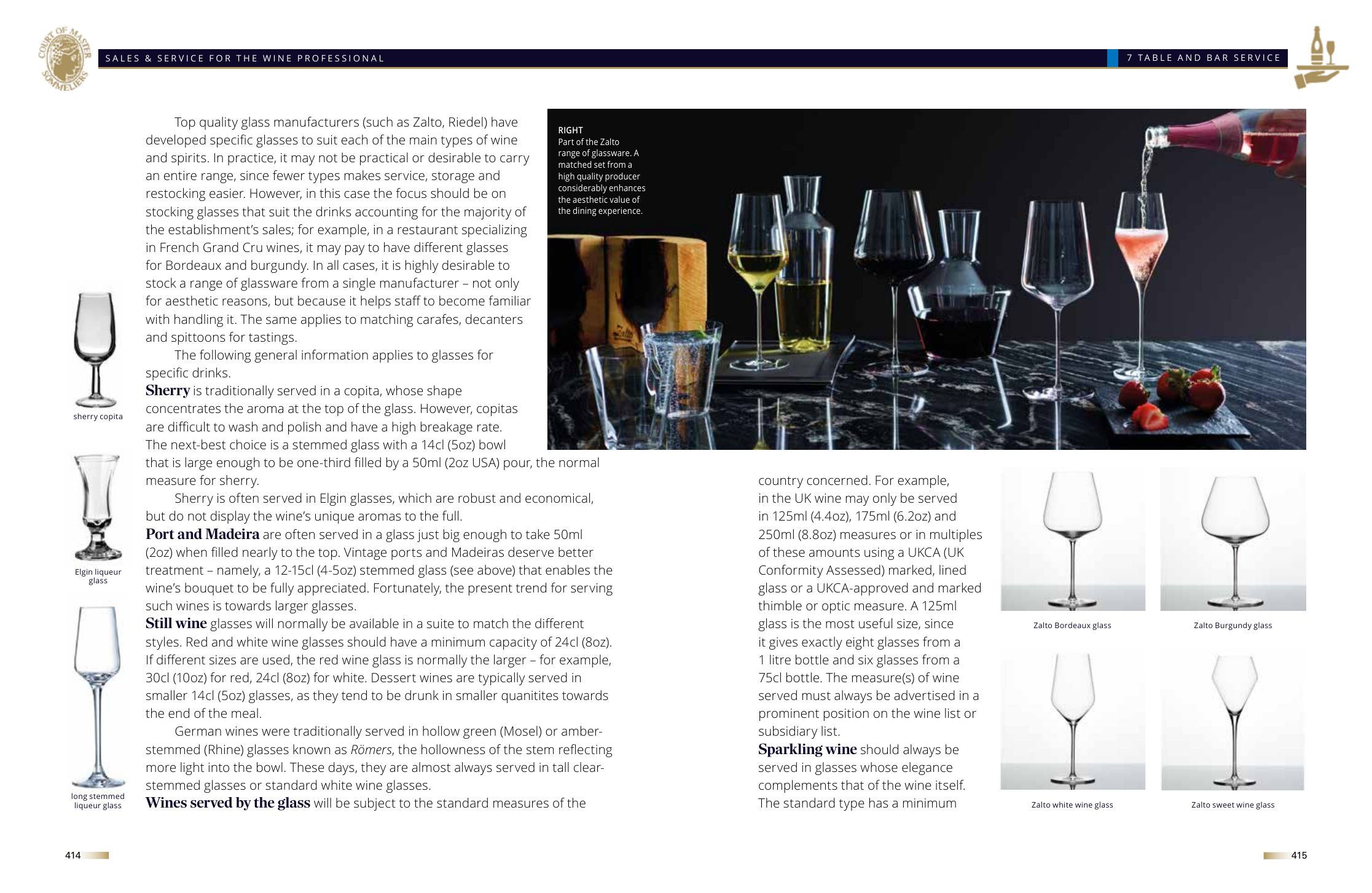
Mise en placeGlassware selection
◲ Tap any page to read it full-size
Why this chapter matters
What You’ll Learn
Set up a complete mise en place — glassware checked and polished, lists and equipment ready — so you run faultless service.
Select the correct glass for any drink and serve every wine within its proper temperature band.
Present, open and pour still and sparkling wine to standard, controlling a 5–6 atmosphere champagne cork safely.
Decant for sediment or breathing, and diagnose a faulty bottle — cork taint, reduction, oxidation, light strike.
◈ For your CMS exam
Must-Know Facts
Cork taint affects 1–5% of bottles sealed with a cork; a musty smell may instead be a reductive fault.
A champagne bottle holds 5–6 atmospheres of pressure — twist the bottle, not the cork, and never let it ‘pop’.
Red and white glasses need a minimum 24cl capacity; full-bodied reds at 15–18°C, sparkling at 6–8°C.
Decanting both separates a wine from its sediment and lets it ‘breathe’; 48 hours’ notice is ideal for an advance decant.
What This Chapter Covers
01
Mise en place
02
Glassware & temperature
03
Wine & sparkling service
04
Decanting
05
Dealing with faults
06
Cocktails & other beverages
Key Points
01
Mise en place sets the standard: glassware checked and hand-polished, wine lists verified, and all equipment laid out before a single guest is seated.
02
Wine is opened with the ‘waiter’s friend’, the cork eased out without a pop; guests are served clockwise, finishing with the host who first approves the wine.
03
A champagne bottle holds five to six atmospheres of pressure — the cork points away from guests at all times, and the bottle is twisted, not the cork.
04
Decanting serves two purposes only: to separate a wine from its sediment and to let it breathe, performed over a candle flame.
05
Faults are rectified quickly and courteously — corked, oxidised or light-struck wine is checked out of sight, and a sound wine is never met with telling the guest they are wrong.
“At no time let the cork go, or let it point towards anyone.
◈ Sommelier · Chapter 7
◈ Value for the Sommelier
This chapter is where knowledge becomes craft. A sommelier may know every vineyard, yet it is at the table that judgement is felt — the unhurried opening, the temperature judged to the wine, the fault caught and corrected without embarrassing the guest. Mastering this choreography is the discipline by which the Court’s standards are made visible in every glass poured.