◈Fortified wines are those given grape spirit to raise their strength — a practice born in Mediterranean Europe to preserve wine. The chapter anchors on the ‘big three’ — Sherry, Port and Madeira — then extends to Marsala, Málaga, Vin Doux Naturel and aromatized wines such as Vermouth.
From the book
Real Pages From This Chapter
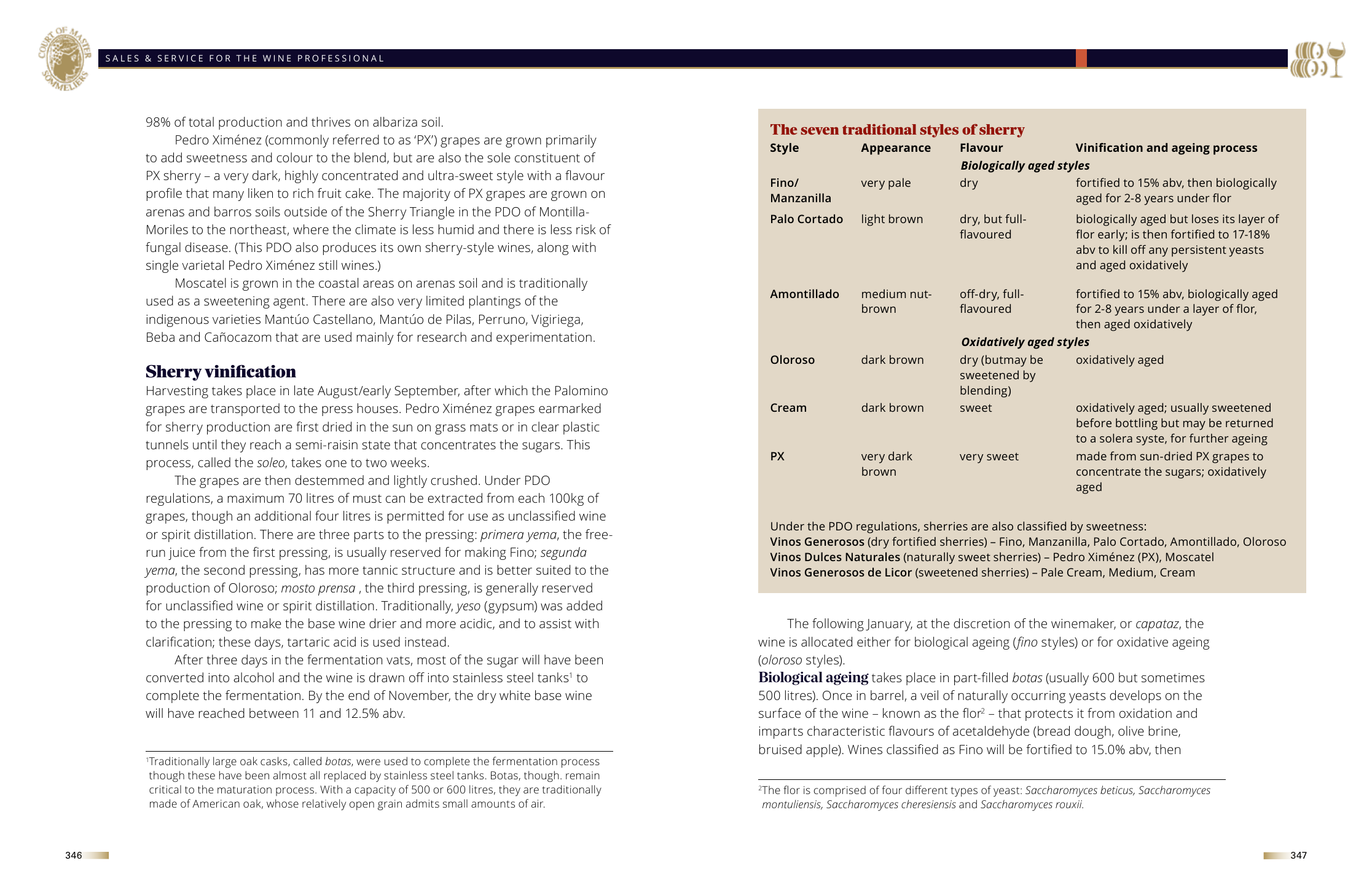
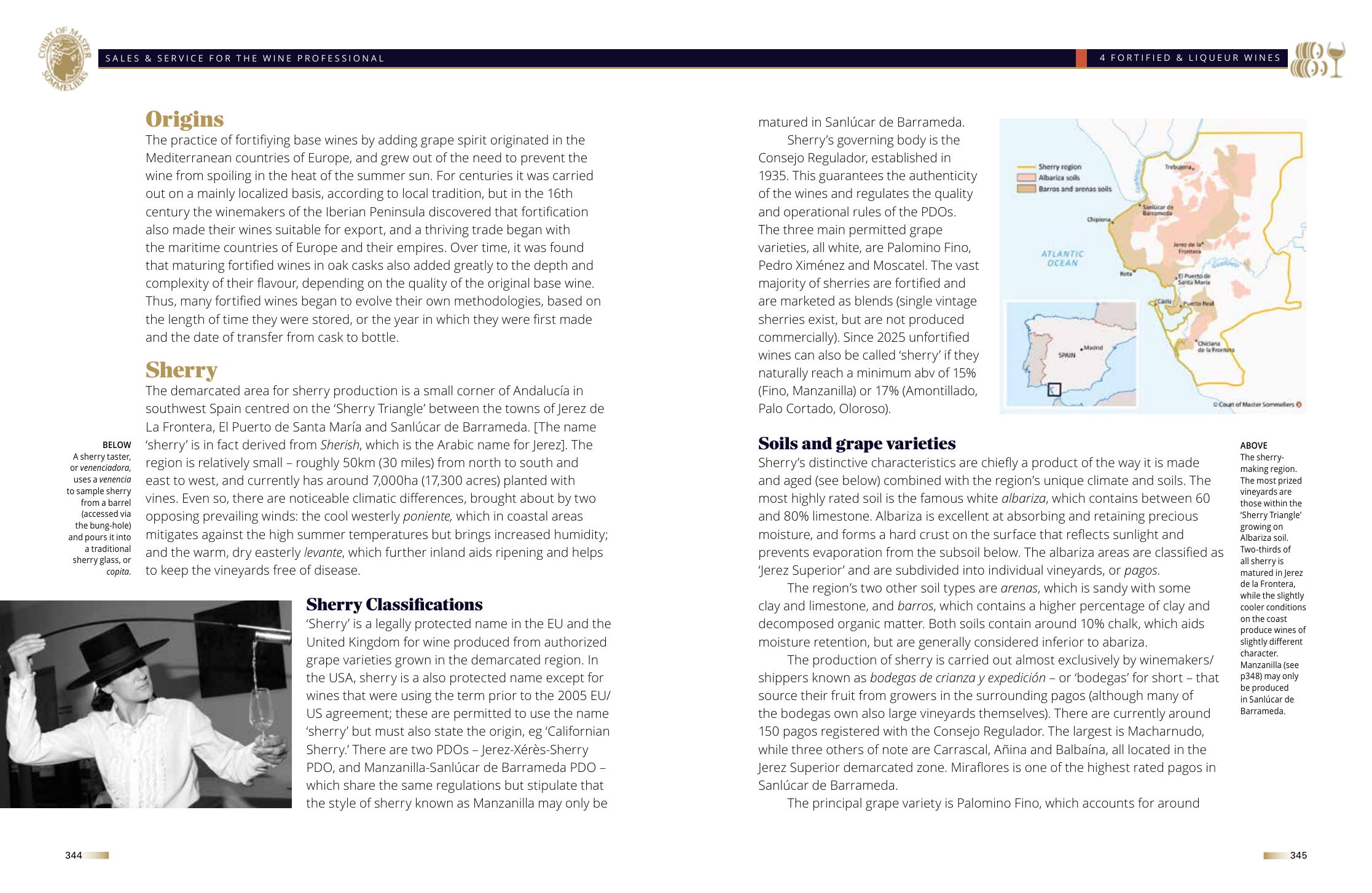
The seven traditional styles of SherrySherry classifications & the bodega
◲ Tap any page to read it full-size
Why this chapter matters
What You’ll Learn
Explain how fortified wine differs from table wine — grape spirit added to raise strength — and place Sherry, Port and Madeira in that family.
Walk a guest through the seven traditional Sherry styles, separating flor-aged (Fino, Manzanilla) from oxidative (Oloroso, Cream, PX).
Describe how the solera system’s fractional blending explains a non-vintage Sherry’s consistency.
Recommend and correctly serve the main Port styles (Vintage, LBV, Tawny, Ruby) and Madeira, including when to decant.
◈ For your CMS exam
Must-Know Facts
Fortified wines are those that have had grape spirit added to increase their alcoholic strength.
Flor is a veil of natural yeast that develops on the wine’s surface, protecting it from oxidation.
In the solera, sherry passes through at least two criaderas plus the solera, with a minimum two years’ ageing.
Madeira is heated in production — estufa tanks at 45–50°C, or the slow canteiro for top wines; ‘maderization’ takes its name from Madeira.
What This Chapter Covers
01
Sherry — flor or oxidative, solera-blended
02
Port — Douro: Ruby, Tawny, Vintage
03
Madeira — heated, maderized, near-immortal
04
Vermouth & aromatized wines
05
Marsala, Málaga & Vin Doux Naturel
Key Points
01
Fortification adds neutral grape spirit; timing controls sweetness — added mid-ferment it retains sugar (Port, Madeira), added after a dry ferment it preserves a dry style (Fino, Oloroso).
02
Sherry’s two ageing paths define its styles: biological under a protective veil of flor yeast, and oxidative in air-spaced botas.
03
The Solera System — fractional blending through tiers of casks — keeps Sherry consistent across vintages, with no more than a third of a cask moved per year.
04
Port spans a clear hierarchy from young Ruby through wood-aged Tawny and Colheita to the rare Vintage, declared only in exceptional years.
05
Madeira is heated in production — by estufa tanks or the slow Canteiro system — producing deliberate oxidation (maderization) and exceptional longevity.
“Unique to sherry production, the Solera System is a system of fractional blending whereby old wine is constantly refreshed by the addition of younger wine of the same style.
◈ Sommelier · Chapter 4
◈ Value for the Sommelier
Fortified wines test a sommelier’s command of process over place: the same grape can become a bone-dry Fino or a syrupy PX depending only on when spirit is added and how the wine is aged. Understanding flor, the solera, maderization and vintage declaration lets the sommelier guide guests through aperitifs, dessert pairings and after-dinner classics with genuine authority.